Table Beer: A Beer For All Ages
With your average craft brew hovering around 6%, it’s easy to forget that most beer was a low alcohol affair for thousands of years.
When beer served as a dietary staple, a high level of alcohol wasn’t desirable. Have you tried swinging a scythe with a buzz? Wheat won’t be the only thing getting sliced. But now that drinking beer has become a recreational activity, people often gravitate towards drinks with higher ABV levels. But sometimes, less is more.
While they’re not a style in the modern sense, table beers offer a glimpse into the historical tradition of brewing low alcohol, but still tasty, pints. So what are you getting yourself into if you pick up a table beer from your favorite beer store? Let’s find out!
What’s a Table Beer?
Table beers originated in medieval Europe as low alcohol brews intended to accompany a family’s meal. And by family, I mean the whole family. Grandma, grandpa, mom, dad, teens, tweens and kiddos learning their ABCs. Sounds strange, but beer was a vital part of life for European families throughout the centuries.
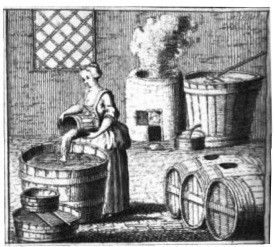
Beer’s popularity wasn’t simply because people were afraid to drink potentially contaminated water. They wanted to be drunk all the time, because life sucked. Kidding! Rather, beer served as a nutritional supplement for people who lived an incredibly active lifestyle. From carbohydrates and fiber to B-vitamins and minerals, beer helped maintain a balanced diet. While saisons quenched the thirst of farmers and grisettes refreshed parched miners, table beers were a family affair.
Since table beers have deep roots in European homebrewing, it’s tough to provide a strict definition. Essentially, any style can be called a table beer. Much like other farmhouse ales, ingredients varied by household and area. Mom (yes mom, not dad) had to brew with what she had. If you didn’t like it, off to the barn to sleep with the cows! The only characteristic that remained constant among table beers was the alcohol percentage, typically between the 1.5-3% range. This makes them the direct ancestor of modern craft brewery’s session beers, which will generally fall under 4.5%.
Table Beers in Modern Brewing
Even when commercial brewing picked up steam in the 18th Century, table beers stuck around. For example, in 18th Century England, the government taxed beers on their strength. So, “table beer” became a tax designation for any beer in the 2.75 to 4% range. Seeing as porters reigned supreme at the time, the English table beer of choice was a low alcohol porter.
Most American craft breweries choose to brew Belgian inspired table beers (or tafelbiers if you’re feeling Continental). Light colored and bodied, these brews use the palest malts and may include some wheat or rye, which add to the rustic charm. For fermentation, brewers choose yeast strains that create notes of pepper, clove or spices, typical characteristics of Belgian beers. Some breweries choose mixed-culture fermentations, which throw different bacteria and wild yeast into the mix, creating more complex flavor profiles. In direct contrast to a large chunk of popular American craft beers, hops play a minor role. Ideally, they’ll add just a touch of citrus, florals or herbs, so hopheads should look elsewhere.
American table beers will have more alcohol than their predecessors, likely around the 3.5-4.5%, but the original intent remains the same: an easy drinking beer, ideally shared among friends and family, meant to complement your life, not overwhelm it.
Style Spotlight: Highway Manor’s ‘Manor Light’
Highway Manor Brewing (Camp Hill, PA) brews sour and wild ales. While these styles can be polarizing, their fermentation process embodies beer’s past. The pure yeast strains brewers use to produce consistent beers today originated in the 19th Century. Before then, any number of microbes could be present in brewing yeast leading to varying flavor profiles. Different bacterias, like lactobacillus and pediococcus, and yeast, like brettanomyces, will create tart and funky flavors in the final product. Modern mixed-culture fermentations embrace this historical variety.
Johnnie Compton III, Highway Manor’s owner and brewer, cultivated a unique blend of microorganisms from the area surrounding a 19th Century mansion in Liverpool, PA. Their house yeast gives each of their beers a truly unique fermentation character. A character pefectly suited for creating a table beer.
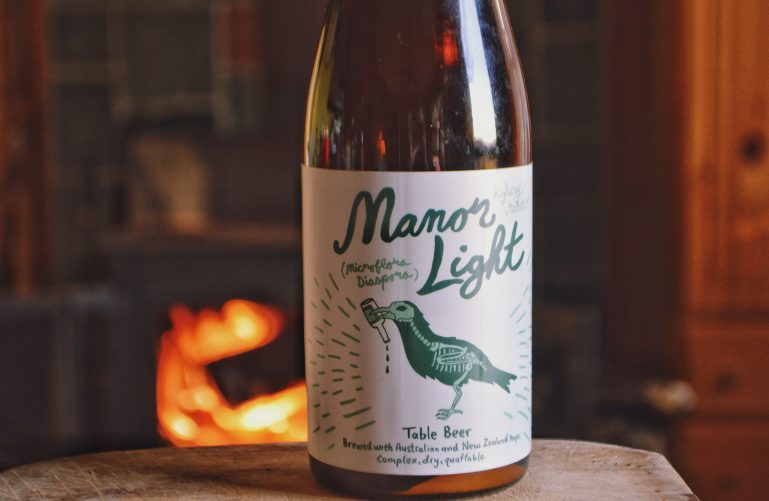
Manor Light (AKA Microflora Diaspora) embodies the characteristics made popular by modern table beers. Most importantly, it’s bright, effervescent, crisp and easy to drink. Touches of funk and tartness mix with lemon zest, hay and herbs recreating a summer day on a farm. At 4.2%, Manor Light may be light in alcohol, but definitely not in flavor. Exactly how a table beer should be.